
10·
17 hours agoLLMs are class reductionists
LLMs are class reductionists
My “I am a Mossad agent” shirt is furthering a narrative that is already furthered by my actions.

They did finally make parking tickets slightly less onerous:
Assembly Bill 1299 was introduced by Isaac Bryan (D-Clover City) and signed into law by Gov. Gavin Newsom on Oct. 6, 2025. It took effect on Jan. 1. If a person can prove their inability to pay a parking ticket in full, the new law authorizes the issuing agency to reduce or waive the parking penalty.
…
Now, if a contestant provides satisfactory evidence, such as proof of homelessness, financial hardship, or other extenuating circumstances, the unpaid parking ticket can be waived, reduced, or paid through a payment plan.
The worst ones were expired registration tickets. Late on registration, or with a sticker that’s been stolen by someone who wishes they had your parking spot, and suddenly you’re getting $60 tickets that double after 21 days, and a vengeful traffic pig can just keep adding to the pile. The city issues the parking violation and the state collects the registration fee and its late penalties, so it’s not in anyone’s interest to listen to you when you say you’d love to register your car, but can’t because your budget goes to paying off the parking tickets.

All enemies of America love killing ThEiR oWn PeOpLe! It’s the only reason they’re in power. Strikes on Russia are just what Putin wants.

I’m also reminded of the time the Washington Post said Bernie was doing a Pinocchio when he said that millions of Americans work second jobs, because the number was eight million and not everyone.

Trump Claims He Will Marry Maduro’s Wife Until Suitable Replacement Found
<WASHINGTON—Stressing that he was prepared to remain in the role for as long as necessary, President Donald Trump claimed Monday that he would marry Venezuelan first lady Cilia Adela Flores de Maduro. “Until we can find a suitable long-term replacement, I’ll be married to Mrs. Maduro,” Trump said in a news conference in which he repeatedly insisted his position as Flores de Maduro’s temporary spouse would not interfere with his current obligations to Melania Trump. “Cilia is a woman with tremendous potential who’s been hampered for too long because of a corrupt and illegitimate husband. So I’m going to step in as her dearly beloved for the foreseeable future while we figure out a way to give her a proper wedding day.” Trump added that his planned honeymoon with the Venezuelan first lady would not cost the American taxpayer “a single cent” because of the involvement of domestic oil companies.
Another promising candidate ruined by going too far to the left.
Fifth-Grader Writes ‘Mrs. Alan Greenspan’ All Over Her Notebook
INDEPENDENCE, MO–Brianna Kilgore, 11, a fifth-grader at Westlake Elementary School, was observed scribbling “Mrs. Alan Greenspan” an estimated 200 times in her notebook during class Monday. “She was totally writing ’Mrs. Alan Greenspan’ and ’Brianna Greenspan’ all over her spelling notebook–big and small, in cursive and block letters, everything,” said Ashley Taylor, who sits directly behind Kilgore in Mrs. Schukal’s class. “Then she took out a pink marker and wrote ’B.K. + A.G.–4EVA’ inside a heart.” When confronted by Taylor, Kilgore denied being in love with the Fed chair and told her classmate to mind her own beeswax.
Corn Pop was a bad dude

I want to nominate an older example, which is all the more insidious because it comes from great German and Austrian Jewish emigre filmmakers who made this anti-Communist garbage in 1939, when you’d think they’d have more urgent enemies to prioritize. The film is Ninotchka, by Ernst Lubitsch. Billy Wilder co-wrote the screenplay, and Greta Garbo stars in the title role. It’s a romantic comedy about a White Russian aristocrat (Melvyn Douglas) trying to stop the Soviets from selling his family jewels. He falls for the humorless envoy (Garbo) who arrives to facilitate the sale.
Sally Jane Black, on Letterboxd, has an excellent review that I’ll quote at length because the filter won’t let me link directly to her profile. At the moment it’s the fourth review from the top on this page.
In 1939, Ernst Lubtisch, Billy Wilder, and a handful of other bootlicking hacks made Ninotchka, which paints the Soviet Union as drab, dull, inadequate, patronizing, heartless, loveless, and cold. It might have sometime been cold, I admit. This was, after all, before capitalists had inflicted the level of pollution and destruction that would bring about climate change.
But loveless and heartless? How dare they. To read Marx’s words on love is to understand a love greater than any individualistic lie capitalism has produced. To be a communist is to be driven by love for humanity beyond anything a capitalist is capable of. No one who thrives off the work of others while those workers starve is a person who knows love.
Patronizing? This is fundamentally opposed to the proletariat’s interests. It is capitalists–who often style themselves as philanthropists–who are patronizing. It is this film that is patronizing in its portrayal of a Soviet woman who speaks to a man in a robotic, monotone, direct manner that is lifeless, as if she is inhuman and must be taught to love.
“Will you smile?” At least it captures bourgeois misogyny.
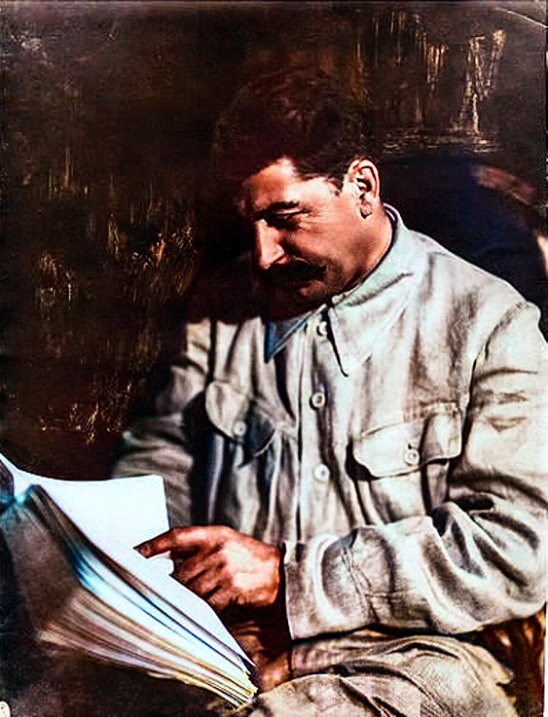
The one time in American history when a state militia was on the side of good:
It resulted in a victory for the union and was followed in 1903 by the Colorado Labor Wars. It is notable for being the only time in United States history when a state militia was called out (May/June 1894) in support of striking workers.
The strike was characterized by firefights and use of dynamite, and ended after a standoff between the Colorado state militia and a private force working for owners of the mines. In the years after the strike, the WFM’s popularity and power increased significantly through the region.
Davis Waite, a Populist, was the governor who called in the militia. He was ratfucked by his Republican legislature and lost a close election later that year. Ten years later, when a pro-miners’ union candidate was close to winning the governor’s office, they outright stole the election:
Peabody ran for a second term in 1904, but was vilified by his opponents, who declared “Anybody but Peabody!” and felt that he was in league with the mine owners. Peabody’s opponent, Democrat Alva Adams, ripped into his handling of the Cripple Creek strike and insisted that he could handle Colorado’s vicious “industrial warfare.” After the election, it appeared Adams had won, but Republicans, who still controlled the state legislature, insisted that significant fraud and corruption had conspired to steal the election from Peabody (in reality, both sides had committed major violations of election law). On the day that Adams took office (March 17, 1905), the Republican-controlled legislature voted to remove him from office and reinstall Peabody, on the condition that Peabody immediately resign. He did so,[1] and at day’s end it was Peabody’s lieutenant governor, Jesse McDonald, who occupied the governor’s mansion in Denver – thus making Colorado the only state to have three different governors (Adams, Peabody, McDonald) on the same day.
A classic example from From Here to Eternity:
In the novel, Captain Holmes ironically receives his desired promotion, and is transferred out of the company. In the film, Holmes is forced to resign from the Army under threat of court-martial for his ill-treatment of Prewitt. The Army insisted on this change, which the filmmakers reluctantly made. Director Zinnemann later complained that the scene where Holmes is reprimanded was “the worst moment in the film, resembling a recruiting short”, and wrote, “It makes me sick every time I see it.”
Behind Blue Lines















They hated Cassandra because she spoke the truth.