

cross-posted from: https://lemmygrad.ml/post/10325385
Archive link: https://archive.ph/PItnG
Links below are also archive links.
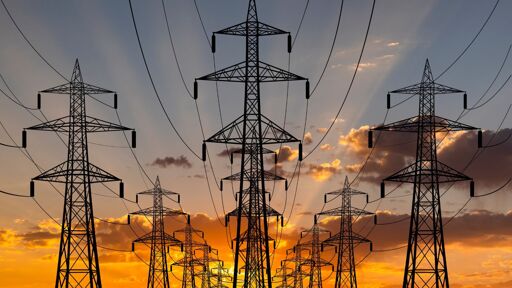
An extended collaboration of researchers in China has successfully reduced the response time to grid failures to just 0.1 seconds, compared to hours in other countries.
The collaboration consisted of scientists from academic institutions, power equipment manufacturers, the national power grid, and automation companies, who worked together for over a decade to make this feat possible.
As the world increases its reliance on electricity to meet heating, cooling, and transportation needs, it also needs to build power infrastructure to support this transition. Power is generated from a wide variety of sources, including hydel, solar, nuclear, thermal, and wind, and is supplied through regional and national grids.
The centralized nature of power supply can be a major hurdle in the case of a grid failure. Blackouts that ensue in such a scenario can take hours to recover from.
The risk of grid failure is even higher as more intermittent power sources, such as solar and wind, are added to the grid. In such a scenario, grids need highly efficient recovery systems.
China has been working on this for more than a decade and has now decreased the response time to just a tenth of a second.
What does the tech do?
The effort follows a previous proactive initiative by the state-owned grid company, which used an artificial intelligence system to resume power supply in 3 seconds. This was deployed in 2022.
However, the nature of the grid has been changing over the years, and China needed an even more resilient recovery system.
A team of researchers from research institutes such as Tianjin and Shandong universities, State Grid Beijing Electric Power, NR Electric, an electrical equipment manufacturer and automation company, and Beijing Sifang Automation worked on the project for over a decade.
The technology enables isolation of power grid faults and ensures their restoration within a hundred-millisecond window. Additionally, it solves the problem of identifying micro-current faults at hundred-milliampere levels, the South China Morning Post (SCMP) said in its report.
This enables the system to balance power from unpredictable sources and divert electricity through diverse grids for high-speed protection and restoration.
Why does China need such tech?
Preventing a major blackout or restoring it quickly when it occurs is the motto of every grid. However, it is even more important in China. The Asian country has the largest power grid in the world, generating twice as much energy as the US and supplying it to industries that manufacture for the world.
In 2025, China’s total electricity consumption was projected to exceed 10 trillion kilowatt-hours (kWh), more than the combined consumption of the EU, Russia, Japan, and India in 2024. As its energy demand continues to grow, China is adding multiple energy sources at an accelerated rate.
Interesting Engineering has extensively reported on the commissioning of new nuclear power plants in China. However, it is also aggressively deploying the world’s largest solar and wind energy plants and constructing the world’s largest hydropower project in Tibet.
With multiple sources of energy feeding into the grid, China needs a highly resilient grid that is highly responsive to fluctuations.
The technology used in the power and rail transport sectors is also exported to 12 nations so far and will help China build more intelligent power equipment in the future, the SCMP report added.
It seems like China is constantly posting new development W’s every other day, but it’s important to remember:
The number of parallel improvement projects they have going at the same time and spend significant amounts of time making a reality is mind-boggling.
In that amount of time in my neck of the woods, we haven’t been able to finish a tunnel bypass under one road and in half that time, haven’t been able to finish a single parking deck.